A technical foundation that's already built, so your operations aren't forced into someone else's template.
ERP · CRM · MIS · ACC
Midbase gives finance the standardized, production-proven base it needs. What sits on top of it, the workflows, the dashboards, the rules, is configured around how your business actually runs, by industrial engineers, not developers or accountants.
Connects to what you already use. Runs on what's already proven.
Connects to what you already use
Midbase integrates with everyday business tools your team already relies on: Xero for accounting, JotForm for intake forms, and more.
Proven, enterprise-grade infrastructure
Midbase runs on infrastructure already carrying production workloads for banking and telecoms clients, not a fresh build with no track record.
Web, mobile, and desktop
Your team works how they already work. Midbase is available across the devices your business actually uses day to day.
Your existing data can connect in
Existing databases and systems can connect directly into Midbase, without a lengthy, expensive custom integration project.
What this means for you
You don't need to hire developers, run a software project, or wait years for a platform to be built. The platform exists: finance-grade, already proven. What we bring is the industrial engineering work to build your operations on top of it, without operations having to bend to fit.
Talk to us about your business →Finance is the foundation. It was never supposed to be the ceiling.
Every business starts with an idea for how to operate: how to make things, move things, serve customers. Finance was always meant to be the foundation for that, the stable, standardized ground every business needs: tax, compliance, reporting, non-negotiable.
Finance stops being just the foundation. It becomes the ceiling too, dictating how operations should work, instead of supporting operations as they actually are.
We keep finance exactly where it should be: the trusted foundation. But we don't let it become the ceiling. Operations, the part that actually creates growth and efficiency, is free to be shaped by how your business runs.
We build the ERP around the business, not the business around the ERP.
Underneath: the layer industrial engineers configure
The details below are for whoever on your team needs to check the platform's technical maturity. Everything above still applies. This is the specification behind it.
Technical specifications +
Fully documented, testable RESTful API
Documented and testable via Postman: proof of API maturity, ready for evaluation before any commitment is made.
Dedicated MCP (Model Context Protocol) layer
This is what Basecase, the platform's AI layer, uses to query, create, update, and automate data across workflows using natural language.
Structured workflow, dashboard, and data-flow logic
A configurable logic layer governing how workflows, dashboards, and data move through the system. This is the layer industrial engineers work in directly.
Production-grade backends
Runs on PostgreSQL and Microsoft SQL Server: established, enterprise-standard database engines.
Automation & data-workflow integrations
Integrates with n8n and Knime for automation and data workflows, plus named examples like Xero and JotForm for everyday business tools.
Built-in ORM layer
External databases can be connected and used directly inside the system. Industrial engineers can work with a client's existing data without a custom data-migration project.
Every platform below is still active in production.
From a 1980s accounting system to South Africa's third-largest fibre network operator. None of these implementations have been ripped out and replaced. They're still running.
WireWire Networks
Fibre & CPE installation, with a captive portal offering
Field installation logistics, equipment tracking, and revenue reporting were disconnected from each other, making it hard to see installed connections against revenue in one place.
Workflow automation for field installation logistics, equipment and stock tracking for field teams, and a revenue analytics dashboard.
Installed connections are now tracked directly against revenue, with field logistics and stock running on the same platform.
So who's actually behind Midbase?
If the technical layer is already solved, the work that's left is business logic: workflows, roles, data structure, process rules. That's not a coding problem, and it's not an accounting problem either. It's an industrial engineering problem, which is exactly why an industrial engineer does it, not a developer or an accountant.
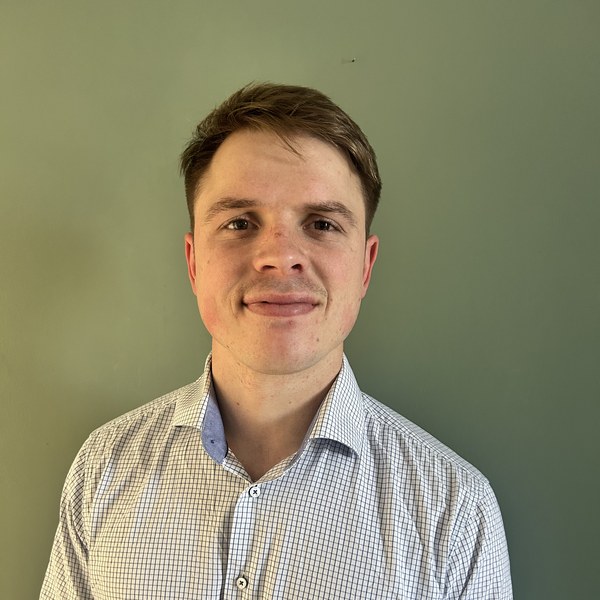
Higgo Smit
Industrial Engineer
Higgo Smit is a qualified industrial engineer, and the person who does the day-to-day implementation work described throughout this site.
Industrial engineering training is built around process design, workflow analysis, and systems optimization: figuring out how a set of moving parts should actually fit together to run efficiently. That's the bridge between "no developers needed" and "so who does it, then."
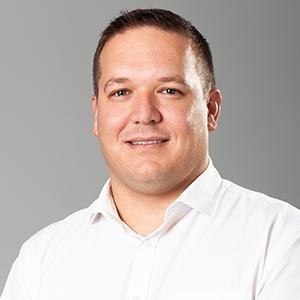
Wayne Edwards
Chief Investment Officer
Wayne Edwards serves as Chief Investment Officer at Iteiga, overseeing financial strategy and investment discipline as the company grows.
That discipline keeps growth sustainable rather than reactive: every investment decision is weighed against the same standard, so the business scales on a sound financial footing instead of momentum alone.

Quentin Opperman
Chief Technology Officer
Quentin Opperman is the Chief Technology Officer at Iteiga and the original creator of Midbase, the platform this entire site is built around. He designed its core architecture: the API, the workflow engine, and the data layer.
Quentin continues to lead Midbase's technical direction today, making sure the platform stays a stable, production-proven foundation as Iteiga configures it around new businesses.
Built by industrial engineers, for the business you run.
Let's talk about how your business runs, and what it would take to build Midbase around it, foundation first.